



⭐⭐⭐⭐⭐
(500+ copies sold so far)
Build Your First Working Electronic Circuit This Weekend – No Experience Needed!
$87 $29 (67% OFF)
The step-by-step ebook that takes you from “I don’t know where to start” to confidently building, measuring, and troubleshooting real circuits — even if you’ve never touched a breadboard.
🔒 30-day “build it or it’s free” guarantee
Sounds familiar?
You want to learn electronics, but you keep getting stuck before you start…
There’s a better way
What if someone just showed you exactly what to do — step by step?
That’s exactly why I wrote, “Make Your First Electronic Circuit.” It’s the book I wish had existed when I started. No jargon dumps. No assumed knowledge. Just a clear, linear path from “I know nothing” to “I just built something real.”
This isn’t a reference book you’ll never finish. It’s a do-it-with-me guide designed so you build a real, working circuit by the time you reach the last page.
You’ll learn exactly how circuits work, how to use a multimeter, how to read a breadboard, and how to troubleshoot when things go wrong — all by actually doing it, not just reading about it.
No Overwhelming, no confusion, clear roadmapThe
The internet is full of free stuff, that’s great. But as a beginner, this is confusing and overwhelming. This book takes care of that and walks you exactly from zero to your first working circuit.
Written by an engineer who has been there just like you
This is not like any other book which assume things. I was there myself and exactly know what matters. This is the book I wish I had when I was just getting started.
Bridging the gap between theory & Practice
It’s not theory heavy nor only hands-on. It is a balanced combination of both theory and practice. So, you learn and then apply the concepts to a real-time project.
Book syllabus – What exactly you will learn
Each chapter and topic lays the foundation for the others. And everything flows in a story, making electronics learning fun and engaging. You complete one chapter, and you will have the curiosity about what will happen in the next chapter.

Chapter 1:
Introduction to electronics
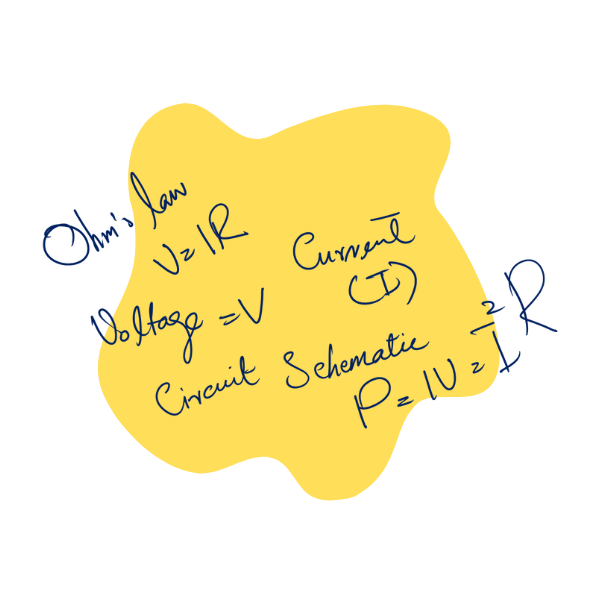
This chapter introduces core concepts like voltage, current, and Ohm’s law. You’ll understand what a circuit is, how to read a schematic, and why it’s the blueprint for every project. You’ll feel confident with the electronics fundamentals terms before moving on.
Chapter 2:
Circuit components
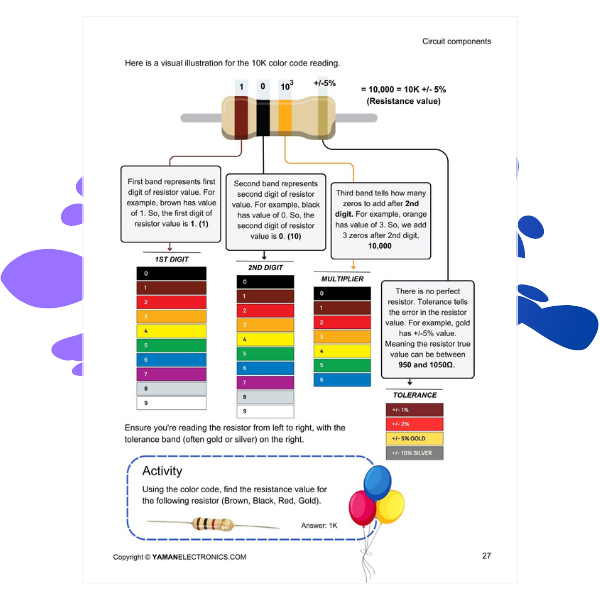
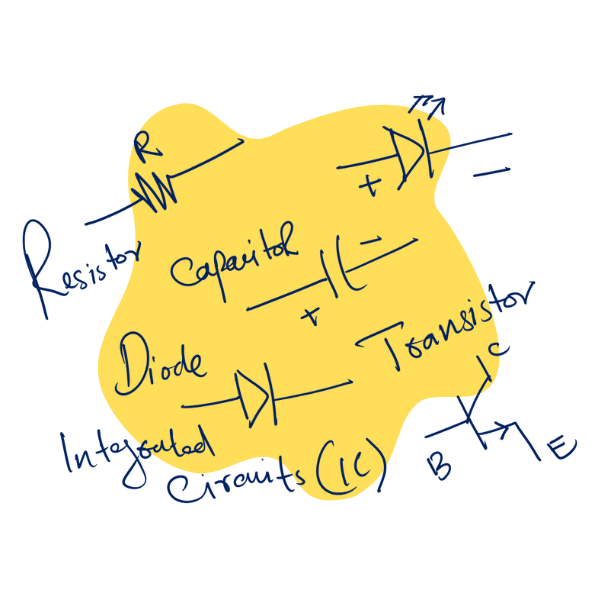
This chapter introduces you to the main building blocks of any circuit. You’ll learn about resistors, transistors, diodes, LEDs, capacitors, Integrated Circuit (ICs), and more. By the end, you’ll understand what each circuit component does and why it’s important.
Chapter 3:
Measurements and testing
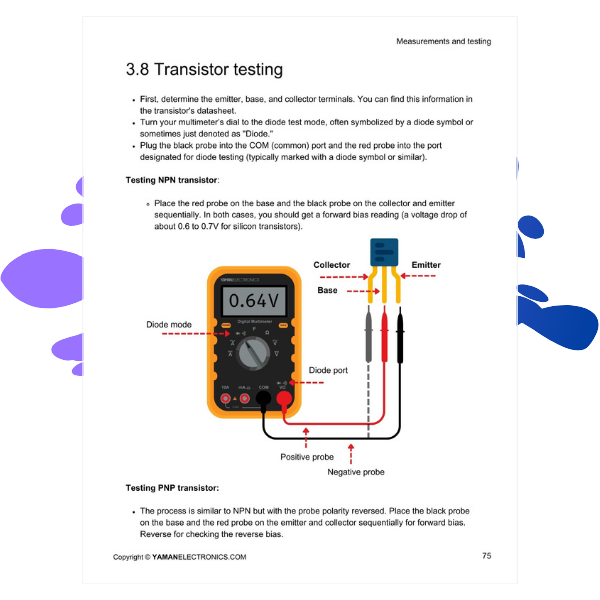
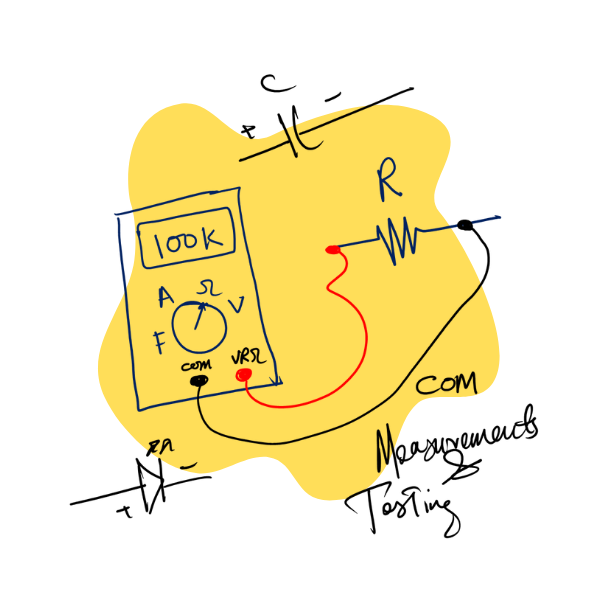
Components need to be measured and tested before we use them in circuits. Here, we learn how to use a multimeter to measure voltage, current, and resistance. This chapter ensures you know how to test your components and make sure they’re working correctly.
Chapter 4:
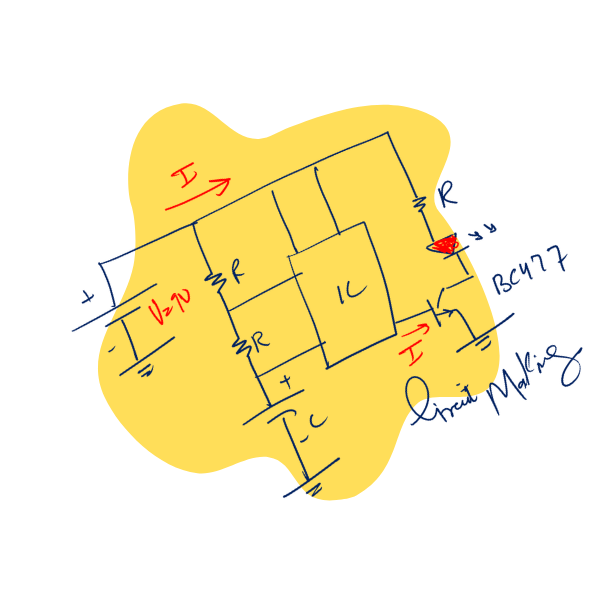
Circuit making
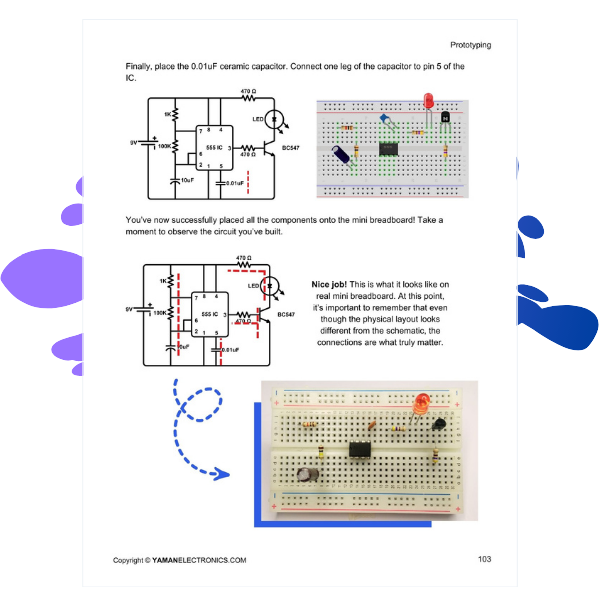
It’s time to bring everything together and build your first working circuit. You’ll use a breadboard to connect the components and bring your circuit to life step by step. You’ll see your circuit in action—proof that you’ve built something real. By the end, you’ll have successfully made your FIRST ELECTRONIC CIRCUIT from scratch.
Chapter 5:
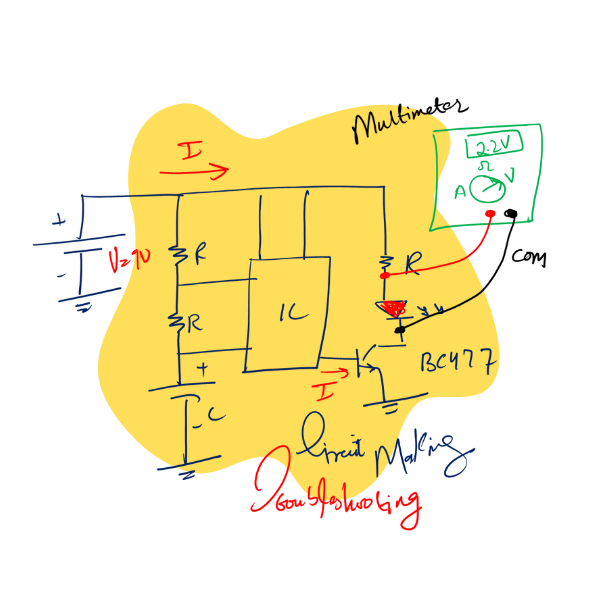
Circuit troubleshooting
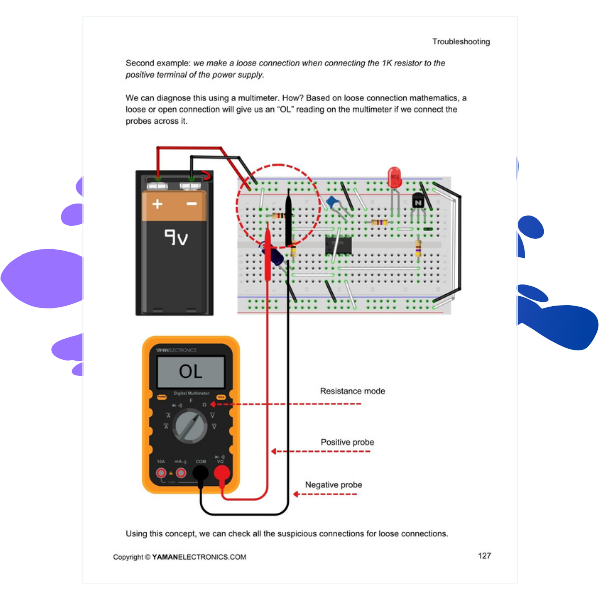
Not every circuit works perfectly the first time, but that’s part of the learning process. This chapter walks you through common problems and shows how to troubleshoot issues like loose connections or reversed components. You’ll learn to fix your circuit and make it work smoothly.
Here’s everything you get
The Complete “First Circuit” Toolkit
Everything you need to go from zero to a working circuit — nothing left to figure out on your own.
The “Make Your First Electronic Circuit” eBook
(Value $29)
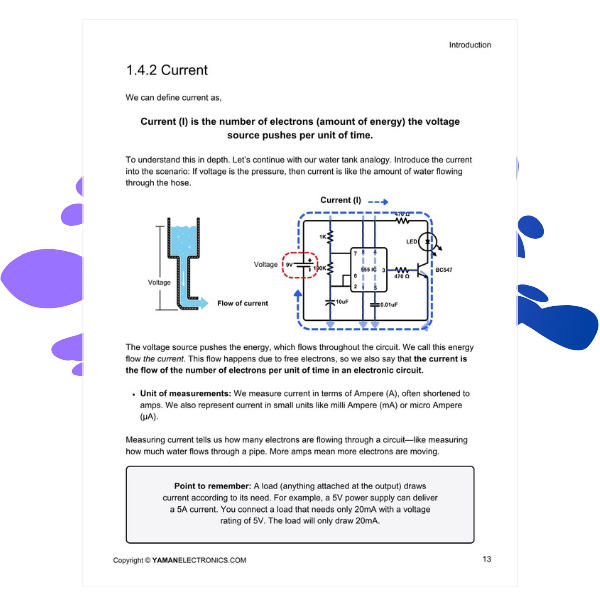
The complete, beginner-friendly guide covering circuit fundamentals, breadboard basics, multimeter measurements, hands-on circuit building, and troubleshooting — all in a clear, logical sequence that builds on itself.
Complete Component Shopping List
(Value $19)
Every single part you need — with direct purchase links. No more guessing which resistor value to buy or whether your breadboard is the right size. Just click, order, and you’re ready.
Troubleshooting Decision Flowchart
(Value $15)
“My circuit doesn’t work — now what?” This printable flowchart walks you through every common failure point so you can diagnose and fix problems without asking anyone for help.
Circuit Diagram Cheat Sheet Pack
(Value $15)
Clean, labeled diagrams for every circuit in the book — plus common symbols and schematic conventions. Print them out and keep them at your workbench as a quick reference.
Multimeter Quick-Reference Card
(Value $9)
A one-page visual guide showing exactly where to plug the probes, which setting to use for voltage/current/resistance, and how to read results. Keep it next to your meter.
Total value inside:
$87
You get it today for just $29 (Save 67%)
Written for complete beginners
If you are confused and overwhelmed by too much information and don’t know where to start learning electronics, this is the book for you. If you are struggling to connect theory with hands-on practice, this book is for you.

Simple language
Everything is presented in simple plain English. I used real life analogies to explain the concepts.
Color diagrams
Every concept has its related color diagrams to help you better understand and remember the concepts.
Challenges and Activities
Inside the book, there are challenges & activities to help you deepen your understanding.
Author
Let me introduce myself

If we haven’t met before – hi, I am Abbas. I’ve been fascinated by electronics since childhood, and later I went on to graduate in Electronics Engineering. But here’s the truth: even with all that passion, learning electronics was hard.
Back in university and while building projects on my own, I found the process confusing, overwhelming, and honestly, frustrating. There was no clear roadmap for beginners — you were left to figure it all out by yourself. I kept thinking, there has to be a better way to learn this. Years later, I looked around and realized… no one had created that beginner-friendly path I wished I had.
So, I decided to build it myself. And that is the reason I wrote this book. This is the book I wish I had when I was starting out.
The “Build It or It’s Free” Guarantee
Try the entire book and all the bonuses for 30 full days. Follow the steps, build your circuit. If you don’t feel like you got more than $29 of value — or if you just don’t like it — email me and I’ll refund every penny. No questions. No hoops. The risk is entirely on me.
Frequently asked questions
If you don’t see your question or are left with any confusion, just contact me. I will answer that for you. Don’t hesitate to ask me.
Stop Watching. Start Building.
I sincerely thank all of you for making it this far. This means so much to me. And if you think that this book is perfect for you, then please give it a try. I have so much to teach you. Your first working circuit is one weekend away. Get the complete toolkit and prove to yourself you can do this.
Total value: $87
$29
One-time payment — not a subscription
- “Make Your First Electronic Circuit” ebook
- Complete component shopping list with links
- Troubleshooting decision flowchart
- Circuit diagram cheat sheet pack
- Multimeter quick-reference card
- Lifetime access + free updates